
Chasing 70 Degrees: The Art of Following Perfect Weather in an RV
Chasing 70 Degrees: The Art of Following Perfect Weather in an RV
How to find the ideal temperature for RVing in each season.
By: Peter & Kathy Holcombe
There’s a certain freedom that comes with RV life that goes beyond mobility; it’s the ability to design your environment. While most people brace for sweltering summers or bitter winters, RV travelers have a different option: simply leave.
By following elevation, latitude, and seasonal shifts, you can craft a lifestyle that hovers in that sweet spot of cooler than 80°F in summer and warmer than 50°F in winter—while experiencing some of the most beautiful landscapes in North America at their peak. You can create an annual migration in deliberate pursuit of spring blooms, alpine air, and golden fall light.

The Summer RVing Strategy: Climbing for Cool Air
When temperatures rise, the solution is simple: go north or go up.
A reliable summer route begins in late May or early June by heading into the mountains of New Mexico, where the high country around Taos and the Sangre de Cristo Mountains offers a surprising escape from desert heat. From there, continue north into Colorado, one of the crown jewels of summer RVing. The Rockies provide endless options above 8,000 feet. Places like Crested Butte, Telluride, and Rocky Mountain National Park rarely push past the mid-70s, even in July.

From Colorado, drift into Wyoming and Montana, where wide-open spaces and higher latitudes keep things comfortable. The Wind River Range, Yellowstone, and Glacier National Park offer crisp mornings, mild afternoons, and a sense of scale that’s hard to match. These regions also tend to stay well below your 80-degree ceiling, especially if you favor higher elevations.
Continue west into Idaho, where mountain towns like Stanley and Ketchum provide stunning scenery without the crowds of more famous destinations. Then, loop into California’s high country: the Eastern Sierra. Areas around Mammoth Lakes, June Lake, and even higher elevations near Lake Tahoe deliver perfect summer weather with dramatic alpine backdrops.
Bonus Summer Escapes in the Southwest
Even in the Southwest, there are hidden pockets of cool relief. Northern Arizona’s Mogollon Rim, Utah’s Boulder Mountain, and the high plateaus around Bryce Canyon all sit at elevations that can drop temperatures by 20 degrees or more compared to nearby deserts. These “microclimate escapes” are invaluable if you want to stay off the beaten path while avoiding the heat.

Fall RVing Sweet Spot: Color Above, Desert Below
Fall is where everything comes together. It is the most balanced—and arguably the most rewarding—season of the entire RV migration. You’re no longer just chasing comfortable temperatures; you’re moving through peak visual moments across completely different landscapes.
Colorado, Wyoming, and Montana light up with fall color beginning in September, as aspen groves turn brilliant gold, spreading across entire hillsides. The contrast of golden trees, dark evergreens, and early snow on the peaks is hard to beat. Temperatures settle into that ideal range: crisp mornings, warm afternoons, and cool, quiet nights. This is the time to slow down, take scenic drives, and really sit with a place for a few days.

Then, as October approaches, the transition begins—but it’s gradual. You follow the color downhill. Aspen gives way to cottonwood, and alpine terrain softens into high desert mesas and river valleys.
Northern New Mexico becomes a highlight here, with golden cottonwoods lining the Rio Grande against red rock and adobe landscapes. The air warms slightly, the light softens, and the pace naturally eases.
From there, you ease into the desert Southwest of Utah and Arizona just as conditions become nearly perfect. By late October and November, the desert has shed its summer intensity. Daytime temperatures hover comfortably in the 60s and 70s, nights are cool but manageable, and the lower angle of the sun brings out incredible depth and color in the landscape.

This is the best time to explore canyon country. Trails that would feel punishing in summer become enjoyable, and long days outside feel effortless. Even the desert offers its own version of fall color, with cottonwoods glowing along washes and subtle shifts in grasses and shrubs adding warmth to the terrain.
Just as importantly, this season offers breathing room. Summer crowds have faded, and winter travelers haven’t fully arrived. In the West especially, that means more access to quiet campsites, more flexibility, and a stronger sense of solitude.
Fall is less about escaping weather and more about following beauty—from golden alpine forests to warm desert evenings. It is the season where this entire way of traveling really clicks, and you can find a great rhythm.

Winter RVing: Chasing Warmth
By November, the goal is clear: stay above 50 degrees. This means heading south and, often, closer to sea level.
The classic winter corridor begins in Arizona, where vast stretches of public land allow for free dry camping under sunny skies. Quartzsite becomes a seasonal hub, but the real magic is in the surrounding desert—wide open, quiet, and incredibly cost-effective. This is where the economics of RV travel truly shine: weeks or even months without campground fees.
From Arizona, you can move west into Southern California. Places like Anza-Borrego Desert State Park offer warm days, cool nights, and dramatic desert scenery. If your budget allows, you might spend time in more developed areas like Palm Springs, where RV resorts provide full amenities—pools, golf courses, and social communities—but at a premium. Monthly rates here can rival apartment rents, especially during peak season.

Alternatively, continue south into Baja California. Crossing the border opens up an entirely different experience: beachfront camping, fresh seafood, and a slower pace of life, often at a fraction of U.S. resort prices.
To the east, Florida offers another winter haven. The Gulf Coast in particular maintains mild temperatures and provides easy access to beaches, wildlife refuges, and vibrant communities.
However, unlike the West, free camping is nearly nonexistent. RV parks and resorts dominate, and demand is high—meaning reservations are essential, and costs can add up quickly.
 Boondocking in Baja Mexico.
RV Camping in Spring: Enjoying Bloom Season
As winter loosens its grip, the migration begins again. Spring in the desert is one of the most rewarding times to travel. Arizona and Southern California explode with wildflowers in good rain years, turning otherwise stark landscapes into vibrant carpets of color. Temperatures remain comfortably in the 60s and 70s, making it ideal for hiking and exploring.
From there, begin moving north through New Mexico and into Utah. The red rock country is at its absolute best in spring—warm but not hot, with blooming cacti and fewer crowds than summer.
By late April or early May, you’re back in Colorado’s lower elevations, just as the snow begins to recede and the cycle starts again.
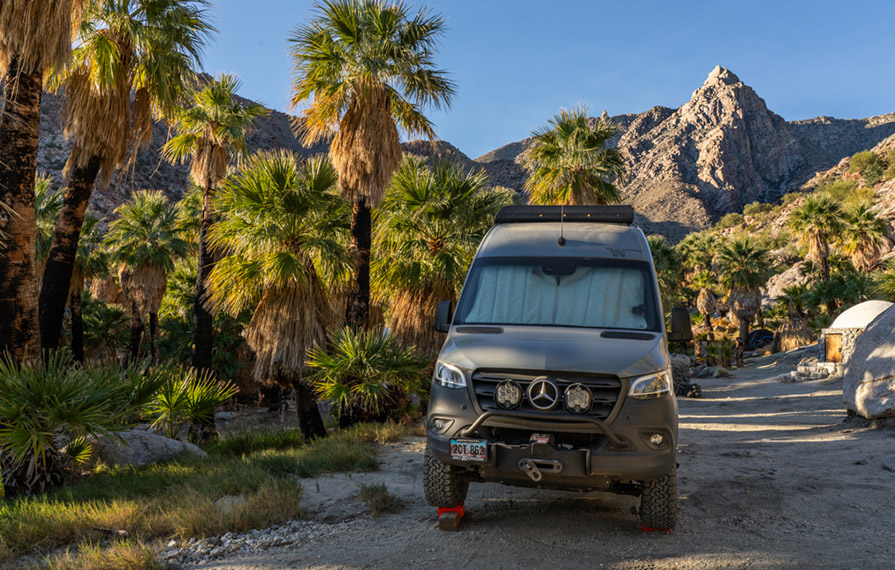
Two Distinct Itineraries for Chasing Perfect Weather in an RV
The Western Route: Freedom and Flexibility
The western United States is tailor-made for the RV lifestyle. With vast tracts of public land managed by the Bureau of Land Management and the Forest Service, you can camp for free, or very low cost, in many areas. This allows for spontaneity—staying longer in places you love and moving on when you don’t.
A typical western loop might look like this:
- Winter: Arizona → Southern California → Baja
- Spring: Arizona → Utah → New Mexico → Colorado
- Summer: Colorado → Wyoming → Montana → Idaho → Eastern Sierra
- Fall: Montana → Wyoming → Colorado → Utah → Arizona
This route maximizes public land access, minimizes costs, and offers some of the most dramatic scenery in the country.

The Eastern Route: Structure and Planning
The eastern U.S. presents a different challenge. While it offers incredible destinations, like the Appalachian mountains, coastal regions, and historic towns, it lacks the abundance of free public land found out west.
This means more reliance on private campgrounds and state parks, and significantly more planning. Reservations are often required months in advance, especially during peak seasons.
An eastern loop might look like this:
- Winter: Florida (Gulf Coast, the Keys, or inland areas)
- Spring: Georgia → Carolinas → Virginia (following blooms north)
- Summer: Blue Ridge Mountains → Shenandoah → New England (Maine, Vermont, New Hampshire)
- Fall: New England foliage → Appalachians → back south
While this route can still deliver mild temperatures, it requires tighter logistics and a higher budget for camping.

RV Cost Considerations: Resort Living vs. Boondocking
One of the biggest contrasts in chasing perfect weather in an RV is the cost spectrum.
In places like Palm Springs or coastal Florida, RV resorts offer a high-end lifestyle—full hookups, amenities, social events—but often at $1,000–$2,500 per month during peak season. For some, this is part of the appeal: comfort, community, and convenience.
On the other end of the spectrum is boondocking in the Arizona desert or on western public lands. Here, your nightly cost can drop to zero. The trade-off is fewer amenities (no hookups and no services), but for many RVers, solitude and connection to nature more than compensate.
Most travelers find a balance: mixing occasional resort stays with extended periods of free or low-cost camping.

The Bigger Picture of Finding Your RVing Rhythm
What makes the RVing lifestyle so compelling isn’t just the comfort; it is the access to incredible experiences. Within a single year, you can see alpine lakes, desert blooms, coastal sunsets, and vibrant fall forests, all while staying within a narrow band of ideal temperatures.
It’s a reminder of just how geographically diverse the United States is. Few countries offer this kind of range within such accessible distances. From the high peaks of Colorado to the warm beaches of Florida, from the deserts of Arizona to the forests of Montana, the ability to “dial in” your climate is a uniquely rewarding way to travel.

Chasing perfect weather isn’t about escaping seasons; it is about choosing the best version of each one for your camping style. And in a country this varied, that journey can last a lifetime!
What are your favorite places to take your RV for ideal weather? Please share in the comments!
Comments
Comments on this post are moderated, so they will not appear instantly. All relevant questions and helpful notes are welcome! If you have a service inquiry or question related to your RV, please reach out to the customer care team directly using the phone numbers or contact form on this page .