
Is Your Dog Ready for RV Life?
Is Your Dog Ready for RV Life?
What to consider before RVing with a dog.
By: Kenny & Sabrina Phillips
Our first RV experience was when we rented an RV in October of 2016. After years of researching RV travel, we felt a rental would be the best way to truly test the waters before purchasing an RV of our own. When we planned that trip, we decided not to bring our dog Belle with us. We knew our first time RVing would already come with a learning curve, and we didn’t want the added pressure of managing a new environment for Belle to influence how we felt about RV life overall. It was important to give RVing a fair and honest first impression before adding another major variable into the mix.

Top Considerations When Bringing Your Dog RVing
Adding a dog to RV life is a big step with several variables. Dogs do not handle the motion of vehicles the same way. Some are fine, some not so much, and some flat out freak out. We already knew Belle was comfortable in a car, but she was definitely skittish with unknown sounds, and there are plenty of those in an RV.
Weather in an RV is also dialed up to a ten. A small rainstorm can sound like a major storm. And then there is the lack of routine. This is one of the things I love most about RV life, but for some dogs, routine is how they know when you are coming home from work or when it is dinner time. It is also important to consider your dog’s health, including things like medications, mobility concerns, and overall comfort on the road.
Adjusting Your Dog to RV Life Gradually
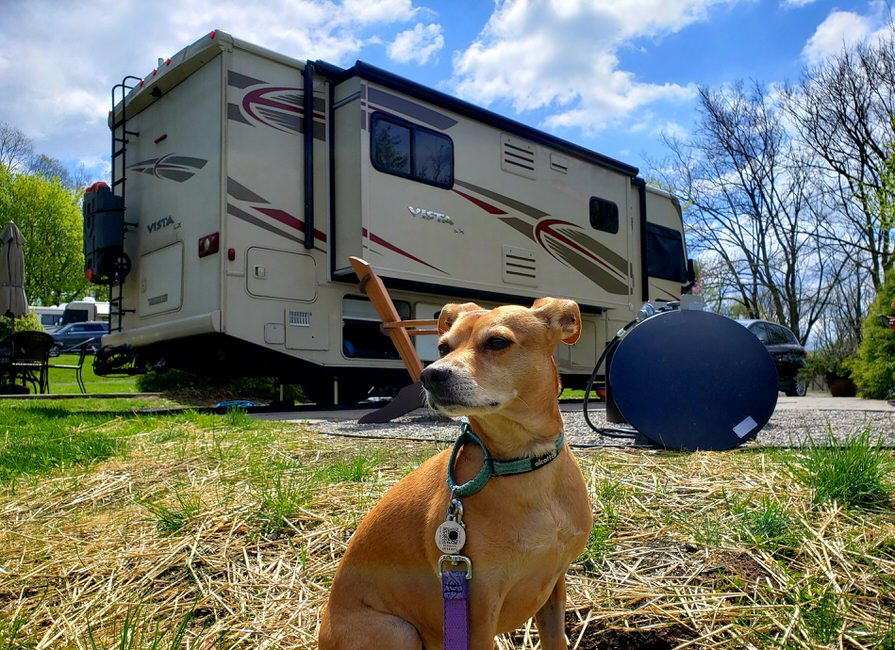
After our rental experience, we knew we were excited about RV travel. Now it was time to purchase an RV and get Belle ready and excited, too. We already had one strong advantage going for us: knowing Belle was a great traveler in a car. She had no motion sickness and no anxiety while on the road; however, we quickly found that even though she was great in a car, she was nervous while traveling in our Class A motorhome.
She would often look to Sabrina for comfort from the sounds of plates, cups, and anything else shifting in our cupboards. She was also not a fan of potholes, which brought an extra level of rattle and vibration. To help ease her into the RV and show her that nothing bad was going to happen, we started small by taking her on local outings and short trips.
We felt this approach would help build confidence, allowing her to experience the extra noises an RV makes compared to a car while also learning that those noises were harmless. We also made sure to bring her somewhere fun in the RV, even if it was just a park, so she began to associate RV travel with enjoyable destinations.

Nowadays, Belle is the first one to run into the RV when it is time for a trip, and she typically naps in her bed, which sits between our two captain chairs. Those early training sessions truly paid off.
Helping Your RV Dog Adjust to New Surroundings
Exploring a new area is about more than just where you visit for the day, week, or even a month. It also means sleeping somewhere completely new for your pet. When you combine that with a dog’s natural instinct to protect and their heightened senses, some dogs may have trouble fully relaxing and getting a good night’s sleep.

When traveling, we do a lot of overnight stays at Cracker Barrels, casinos, Flying J’s, and similar locations. These stops are often noisy, with sounds from traffic, generators, and people nearby. In our early years of traveling, we found Belle to be on high alert in these environments, so we had to find a workaround.
We started arriving earlier in the evening and giving her time to walk, sniff, and survey the area so she could get comfortable with her surroundings. When it was time for bed, we would turn on a white noise machine to help drown out low-level background sounds. This put her at ease, and we quickly realized that we slept better with the white noise on as well.
If you find your dog is too reactive for these types of overnight stops, we recommend staying at dedicated campgrounds. While they can be busy and loud during the day, they often have designated quiet hours at night. You can also try dry camping, but it is important to remember that this often comes with a different set of nighttime sounds from nearby wildlife.

Making Sure Your Dog Can Be Left Alone in Your RV
One of the best things about RV travel is the ability to bring your dog along without dealing with "no dogs allowed" signs or hotel pet fees. That said, there will still be times when you want to visit a museum or enjoy a restaurant where dogs are not permitted. In those moments, it is important to know that your dog can be left alone for a short period of time without damaging your RV or, more importantly, hurting themselves.
A good way to evaluate this is to think about how your dog does when left home alone in a house or apartment. Another consideration is whether they are comfortable being left alone in a car for short errands. These situations can offer valuable insight into how your dog might handle being alone in an RV.

If you plan on leaving your dog alone in an RV for any length of time, it is critical to plan for their safety in both hot and cold climates. Leaving a pet unattended in an RV can carry the same risks as leaving them in a car. Temperatures can rise quickly, a distressed dog may bark and disturb nearby campers, and in some cases, authorities could be contacted over concerns of neglect.
We use several tools to make sure Belle is comfortable and safe in the RV, even if we step away for a short time. A Waggle pet monitor alerts us to rising or falling temperatures, a Wyze security camera allows us to check in and talk to her, and a lithium power backup system helps keep our air conditioning running in the event of a power outage. These are all important considerations when deciding whether your dog is truly ready for RV life. (Note that Winnebago Connect in the View/Navion models includes a pet minder to help you check the temperature and more!)

Working on Your Dog’s Leash Skills and Campground Etiquette
If you plan on RVing with a dog, chances are you will spend a lot of time in RV parks and campgrounds. Even dog-friendly campgrounds have rules, and they are usually enforced. These rules are often printed on your welcome sheet when you check in and may also be posted near play areas, dog parks, and hiking trails. Knowing what is expected of both you and your dog helps create a better experience for everyone.
I don’t think we have ever stayed at a campground that did not have leash rules. The most common requirement is a six-foot leash, and the more practice you have walking your dog on a leash, the easier it will be to navigate through a campground.
Campgrounds also provide opportunities for dogs to socialize, and many RV resorts even offer large dog parks for off-leash play. Belle can be a bit reactive when meeting new dogs for the first time, but knowing that allows us to judge whether a park feels too busy for her. She enjoys meeting one or two dogs at a time, but does not like being crowded by several at once.

Another rule that is taken very seriously is cleaning up after your dog. Picking up waste immediately is expected in all campgrounds and is one of the quickest ways to stay in good standing with both campground staff and fellow campers. Excessive barking is another concern, especially during designated quiet hours. A dog that is constantly barking can quickly become a disruption in a quiet park.
Some RV parks also do not allow dogs to be left alone at the campsite, and dogs should never be left unattended outside. Understanding and respecting these rules ahead of time helps prevent issues and ensures that everyone can enjoy their stay.
Confirming Your Dog’s Personality Matches RV Life
Some dogs, like Belle, thrive on adventure and change; they enjoy the chance to explore new places. Then there are dogs that want their routine with familiar places and plenty of snuggle time on a sofa. RV life offers a chance for something new to happen every day and with that can come a lot of surprises, good and bad.
A dog that settles quickly, sleeps well, and shows curiosity in new environments is often a good fit for RV travel. A dog that struggles to relax, becomes withdrawn, or shows signs of ongoing stress may be telling you they prefer a more predictable lifestyle. I am confident your dog will communicate what works best for them through their behavior, as long as you are willing to listen.

We are lucky that Belle seems to genuinely enjoy RVing! Her love for RV life actually inspired me to write a book about it. If you want to read a story inspired by one of her real-life adventures, you can check out Belle’s RV Adventures: Desert Discovery. We are finding that the book is a hit with people who like reading to their pets as well as kids, so maybe it can help encourage your dog to embrace RVing! ;)
Final Thoughts on RVing with a Dog
Traveling with your dog can be incredibly rewarding. It gives you the opportunity to experience the world through a different set of eyes and notice things you might have otherwise walked right past. If your dog is ready for adventure and a good match for RV life, I truly believe life on the road becomes even better with a furry companion along for the journey.

Check out this list of top gear for RVing with a dog that you may want to pack!
If there are topics or concerns I may have missed, please feel free to leave a note in the comments. I wish you all safe travels and hope to catch you on the road someday.
Comments
Comments on this post are moderated, so they will not appear instantly. All relevant questions and helpful notes are welcome! If you have a service inquiry or question related to your RV, please reach out to the customer care team directly using the phone numbers or contact form on this page .