
How to Travel Without Campground Reservations in an RV
How to Travel Without Campground Reservations in an RV
Tips for leaving room for the unexpected and adjusting as needed.
By: Kenny & Sabrina Phillips
Sabrina and I tend to zigzag across the country, often going from one coast to the other. That’s usually because of her work schedule, but it’s also because we don’t like sitting still for very long. One thing we’ve found that works for us is keeping our overnight plans loose and skipping campground reservations. Some people might call that winging it, but it still takes some planning and a willingness to change course when things don’t go as expected. It works out far more often than it doesn’t, which is why we keep traveling this way.
Traveling without reservations gives us the flexibility to steer clear of bad weather and heavy traffic, stay a little longer somewhere we really like, or keep moving through areas we’d rather pass through.
 Enjoying great weather while test camping in a Winnebago Elora prototype.
Why Traveling by RV Without Reservations Works for Us
One of the things I appreciate most about traveling in the RV without a reservation is being able to drive farther if I feel up to it. I have a rule when I’m driving our Winnebago Vista: if traffic is light and the weather is good, we keep going. Who knows what tomorrow will bring? Without a specific destination in mind, I can drive until I’m ready to pull over for the night.
That flexibility goes both ways. The next morning, we might sleep in a little longer or spend some time exploring the area where we stopped. It takes a lot of pressure off our travel days. This style of travel can take some getting used to, but with a little practice and using apps like RV Parky and iOverlander, it’s gotten easier over the years.
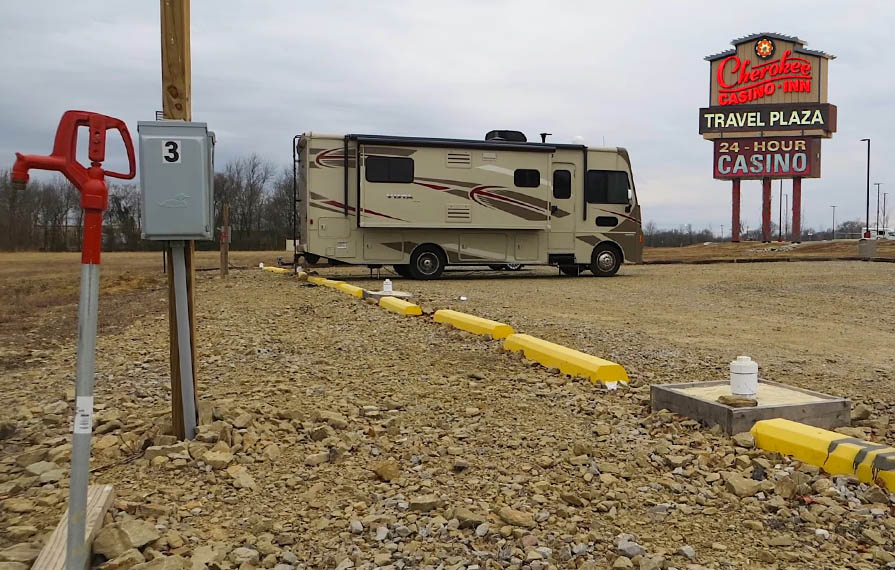 Camping at a casino in our Winnebago Vista.
We often stop at rest areas, casinos, Cracker Barrel restaurants, or Bass Pro Shops. The places we use are first-come, first-served, so there’s no reservation to make. The downside is that we’ve sometimes pulled in to find no available spots or, in the case of a rest area, a temporary closure.
It is also important to note that most of these flexible options we rely on involve dry camping (boondocking), so you will need to be comfortable with camping without hookups. However, some of these options do occasionally have hookups, and we do book campsites spontaneously during our travels as well (more on that later).
 Boondocking in the Winnebago ARKA prototype while test camping.
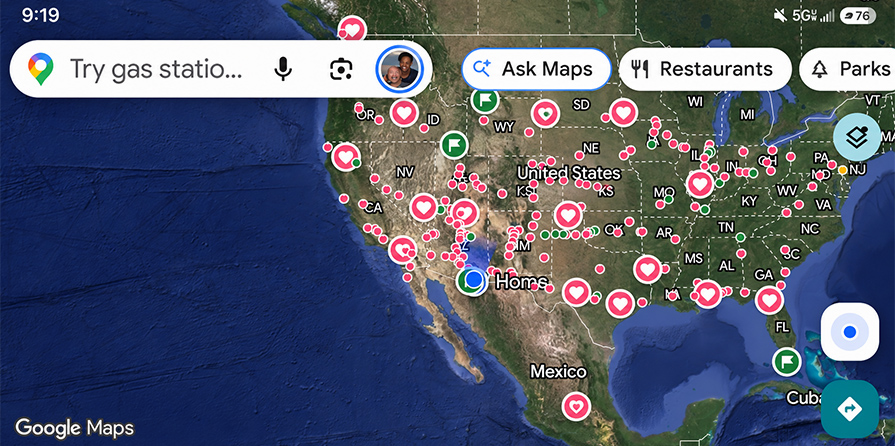
Along with using apps to find new places to spend the night, we save our favorite stops across the country in Google Maps. In the screenshot below, each heart marks a place where we’ve stayed for free and felt comfortable spending the night in our RV. A quick glance at the map tells us whether we’ll be passing any of our favorite spots.
Choosing Where & When to Stop on a Flexible RV Trip
Traveling without reservations can be easier or harder depending on the day of the week, the time of year, and where you’re traveling. On weekends and holidays, we’ve found that the earlier we stop, the better our chances of finding a place to spend the night. That’s especially true for dispersed camping on BLM land, and we’ve found it applies to rest areas, too.
Timing matters even more during the summer, when first-come, first-served spots can fill up fast. We usually have better luck traveling Monday through Thursday. But if we’re passing through a popular tourist area during peak season, all bets are off, and we might have to get creative about where we spend the night.
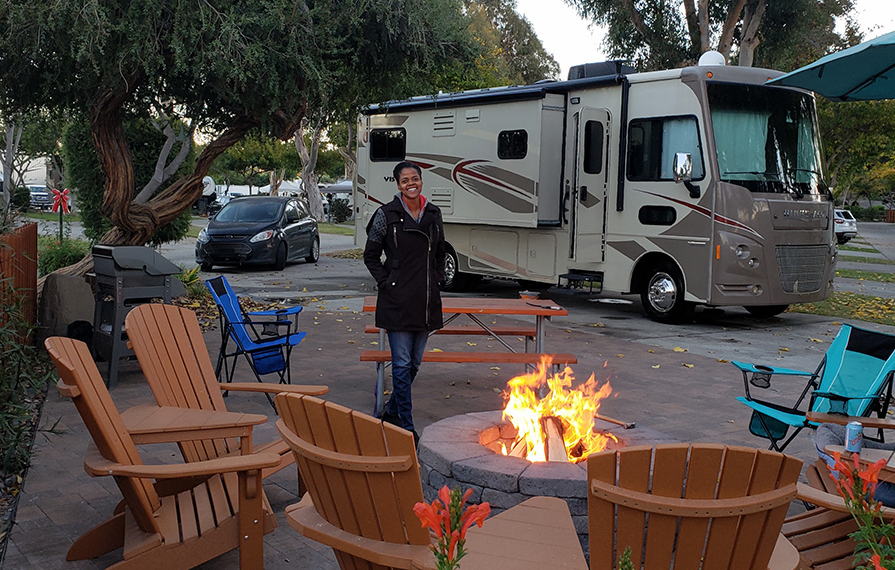 Camping at a KOA in San Diego, CA.
During busy stretches, we use the KOA app to check for openings in towns we’ll be passing through that day. If we find a site that works for us, we can book it right in the app. That keeps our day flexible. It’s harder to make a last-minute stop at a campground that requires us to call or send an email and wait for a reply.
Another option in a pinch is a Love’s Travel Stop with paid RV sites. So far, we’ve always seen openings at the locations we’ve passed, and we can check availability and book a site through the Love’s app. So far, we’ve never stayed in one of the paid sites because we usually find a spot in the free parking area. This works for us because we rarely need to plug in for the night. Flying J also has free parking at some locations.

How Our RV Makes This Style of Travel Easier
I mentioned that we rarely need to plug in for an overnight stop, but that’s just one reason our Winnebago Vista makes it easy to change plans on the road. It also came with a large freshwater tank and plenty of holding tank capacity, so we can make an unplanned stop without immediately having to look for a place to refill or dump. And we can get to everything inside, including our bed, with the slides in. That gives us more options when there’s no room to extend a slide. Plus, our Vista handles cold weather better than we do, so we’ve been able to spend nights in it when temperatures dropped into the single digits.

We’ve also made a few upgrades that make it easier to stop on the fly. We expanded our lithium battery bank, added 1,200 watts of solar, and upgraded to a 3,000-watt inverter. With that setup, we’ve gone weeks without plugging in. We also switched to a Truma AquaGo water heater, which gets our water hot faster and helps us use less propane when we’re dry camping. The less often we need to look for hookups or refill propane, the more options we have for where to spend the night.

One of the tools that makes the biggest difference on travel days is our Garmin RV GPS. It uses the dimensions I enter for our rig to help plan a route, and its “Up Ahead” feature lets me keep tabs on three types of stops along the way. I usually have mine set to show fuel stops, rest areas, and Cracker Barrel locations. If there aren’t any Cracker Barrels along our route that day, I can swap that category for casinos or KOA campgrounds. I think that feature is especially handy for solo travelers. You can see what’s coming up at a glance, which is one less thing you’d usually ask a co-pilot to look up.

Why Backup Plans Are Important When Traveling on the Fly
Some people feel less stressed when they have every detail of a trip planned out. I enjoy keeping our travel days loose, but if you are new to this kind of travel, you should give yourself time to get used to it.
Finding a spot or booking a site at the last minute can get frustrating, so I like to have a Plan B and sometimes even a Plan C. Campgrounds fill up, parking areas close, and construction or an accident can keep you from reaching the stop you had in mind. That last one is usually easier to deal with when you have some flexibility about where you’ll spend the night.
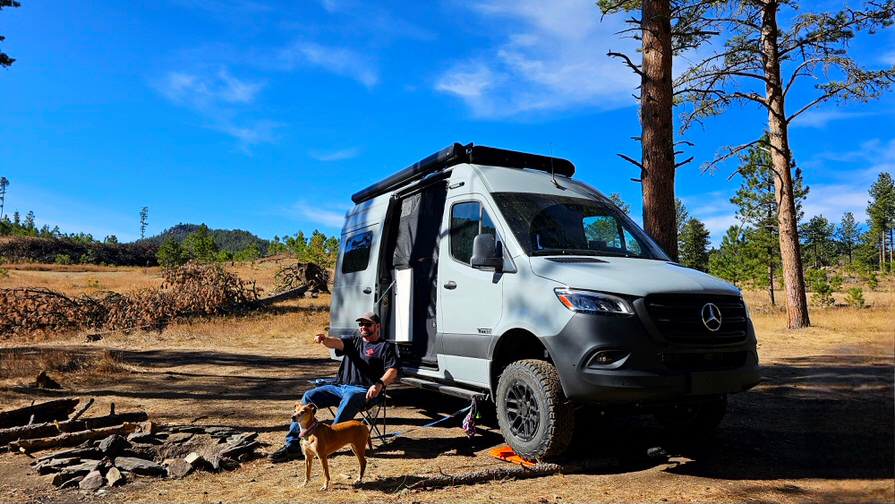 Boondocking in the Winnebago Revel during a test camping trip.
In my experience, the smaller the RV, the easier it is to travel without reservations. When I’ve tested camper vans like the Winnebago Revel and Travato or a compact Class C like the Elora, I’ve had more places to choose from because those rigs fit in spots our Class A can’t. They’re also easier to maneuver without a tow vehicle. With our Jeep hooked up behind the Vista, we can’t back up, so I pay attention to how we’ll get out of a spot before I pull in.
Sabrina and I have been traveling this way for more than nine years, and I still enjoy seeing where the day takes us. I’d love to hear how you travel.
How do you decide when to make a reservation and when to wing it? Please share in the comments!
Comments
Comments on this post are moderated, so they will not appear instantly. All relevant questions and helpful notes are welcome! If you have a service inquiry or question related to your RV, please reach out to the customer care team directly using the phone numbers or contact form on this page .