
How to Winterize Your RV and Storage Considerations
How to Winterize Your RV and Storage Considerations
Plus, what to know before winterizing and top gear to have in winter.
By: Peter & Kathy Holcombe
When the first snowflakes start to fall and the temps dip below freezing, most RVers start thinking about parking their rigs for the season. But for us, winter doesn’t mean the end of adventures—it’s just a different kind of road trip. Sometimes we head south for the winter, chasing perfect 70-degree temperatures, and sometimes we head to the mountains to play in the cold and the snow.

Regardless of whether you’re planning to store your RV for the winter or use it year-round, you’ve got to be smart about winter prep. We’ve lived in our RVs through all kinds of winter weather, from mild frosts to brutal –20°F nights, and we’ve learned what really matters when it comes to keeping your rig safe, cozy, and adventure-ready.
Important Note: These are tips from a fellow owner, not directly from Winnebago. Always be sure to follow the instructions in your operator’s manual for winterization and other maintenance and usage tasks related to your RV.
Winter Option 1: Skip Storage and Keep Using Your RV!
Honestly, we don’t usually bother putting our RVs away. We love winter camping because the crowds disappear, the landscapes change in a beautiful way, and there’s nothing quite like retreating from the slopes to a cozy RV where you can sip on hot chocolate and take in the winter snowscape outside.
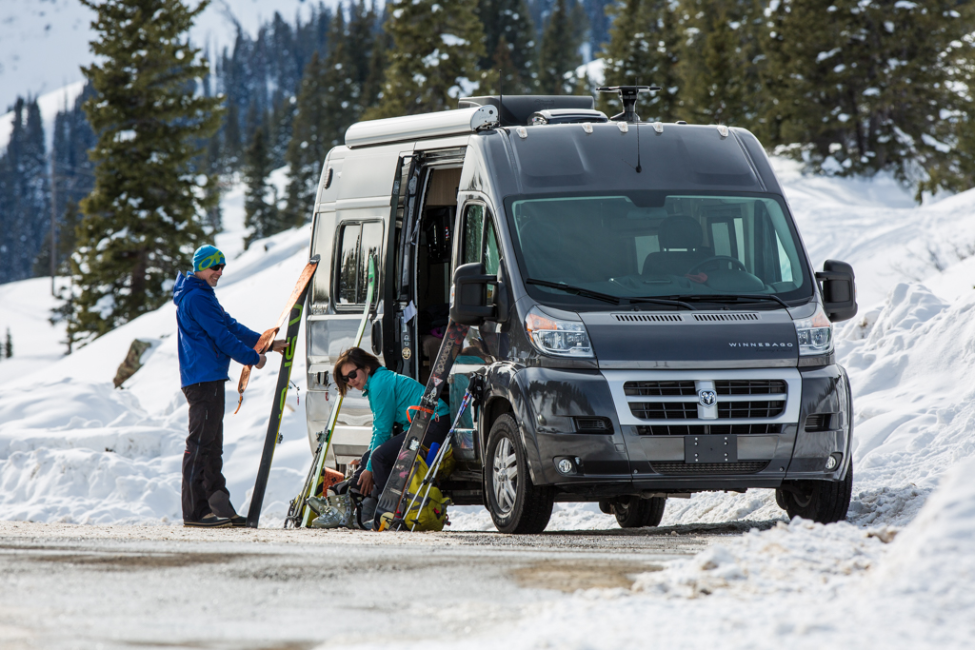
Winter RV Gear to Keep on Hand
If you decide to keep rolling through the winter, here’s what we always keep on board:
- An ice scraper and snow brush
- Extra blankets
- A small shovel
- Cat litter or traction mats
- A tow strap (because … snow happens)
Decide If You Need to Winterize
Now, you’ll need to decide whether you’re dry camping (no water in the system) or keeping your plumbing active.
The safest and most stress-free way to use your RV throughout the winter is to winterize your plumbing system (see the winterizing section below) and dry camp, meaning use the RV without any water in the system. You will eliminate any possibility of breaking a pipe or fitting and will travel stress-free. However, that also eliminates some of the great creature comforts of having an RV.

We typically keep our plumbing system in our Winnebago Revel active and keep our interior temperature around seventy degrees. If you have a well-insulated RV, this should be enough to keep your plumbing liquid. However, be sure to check your owner’s manual for any warnings and recommendations since different RV sizes and types have different requirements for keeping all of your components working and free of damage in winter weather.
If you are going into extremely cold weather, be sure to look outside for any external parts (water heaters, black and gray tank drains, etc.) that might freeze and take precautions, like insulating them, to prevent issues. Our Winnebago View and Winnebago Revel both handled winter really well without any fancy modifications. As long as we kept the inside around 70°F, our pipes stayed thawed and the water kept flowing — even when it was very cold outside. We use a ceramic heater (but you could also use an oil-filled radiator) to keep things warm. They’re considered safe, efficient, and help reduce humidity inside the rig.
The only problem we ever had was on one particularly cold morning, our black tank drain valve froze solid. We had to thaw it out before we could dump, but other than that, no issues at all. It was actually pretty amazing to realize how well these rigs can handle extreme cold if you stay on top of the basics.

Winter Option 2: Store Your RV After Some TLC
If you’re planning to store your RV for the winter, take a little time now to give it some love. We use the fall months as a chance to check everything over and tackle the small stuff that’s easy to ignore when the sun is warm and the rivers are flowing. (Learn how to manage RV maintenance without getting overwhelmed here.)
Our Typical RV Winter Checklist
- Assess brakes and tires. Make sure tires are in good shape and properly inflated.
- Fix any known issues. We always seem to have a list of “we’ll deal with that later” items — fall is later!
- Check all the fluids and wipers. Top off the engine oil, coolant, and washer fluid rated for freezing temps.
- Inspect seals and the roof. Look around windows, doors, and seams for cracks or gaps, and reseal anything that looks questionable.
A few hours in the driveway doing this stuff saves us a ton of hassle (and money) and keeps our rig in tip-top shape.
Read about more RV maintenance tasks you should keep in mind.

RV Storage Checklist
If you decide to park your RV for the winter, the goal is to keep it clean, dry, and critter-free. Here’s what we always do before storing ours:
- Remove all food: Seriously, everything. Even a forgotten box of crackers can invite mice.
- Flip up the mattresses and cushions: This keeps condensation from building up and causing mildew.
- Give it a good, deep cleaning: It’s way nicer to open a clean RV in the spring, and it ensures you didn’t leave any crumbs.
Then comes the great debate: to cover or not to cover your RV.
We’ve never used an RV cover because we rarely store our RV long-term. However, a good-quality, breathable RV cover protects against UV rays, snow, and grime. But a cheap cover? That’s a whole different story—they can trap moisture or flap in the wind and scuff your paint. If you decide to go the cover route, be sure to invest in one made for your specific RV. It’s worth it.
Winterizing Your RV: Get All the Water Out!
If you decide to store your RV for the winter, the single most important thing you can do is to get every bit of water out of your plumbing system. Trust me—nothing ruins the first trip of spring faster than turning on a faucet and discovering a cracked line or a blown fitting because a little water froze and expanded over the winter.
There are two ways to handle this: pumping RV antifreeze into your system or blowing the lines out with air. We’ve done both over the years, and they each have their place.

Pumping RV Antifreeze Through the System
This is the tried-and-true method most people use, and for good reason—it works. The pink, non-toxic RV/marine antifreeze is designed for exactly this.
Here’s how we do it:
- Drain everything first. Empty the fresh, gray, and black tanks, and drain the water heater (but make sure to bypass it before you add antifreeze—no sense wasting gallons of the stuff filling a big tank).
- Hook up a pump converter kit. This lets your water pump pull antifreeze instead of water.
- Run it through the lines. Open every faucet, both hot and cold, until you see pink fluid coming out. Don’t forget the outside shower and the toilet.
- Pour a little into every drain and the toilet bowl. That protects the P-traps from freezing.
It’s not hard—just a little time-consuming. But once you have pink coming out of every faucet, you can rest easy knowing your plumbing is safe until spring.

Blowing Out Your RV Lines with Air
If you are like us and you’d rather avoid adding antifreeze to the system, you can use an air compressor to blow out any remaining water. We’ve done this when we were planning to use our RV again soon, or if we were camping in mild winter conditions and just wanted to make sure things didn’t freeze overnight.
Here’s how to blow out your RV water lines:
- Drain all the tanks and the water heater.
- Hook up a blow-out plug to the city water inlet.
- Set your compressor to around 40–50 PSI max (don’t go higher or you can damage your lines).
- Blow air through the system one faucet at a time until nothing but air comes out.
- Add a little antifreeze to each drain just to protect the traps.
It’s faster, a little cleaner, and perfect if you’re going to be de-winterizing soon.
Our friends at The FitRV also created this great video tutorial about winterizing your RV!
Final Thoughts on RV Winterization
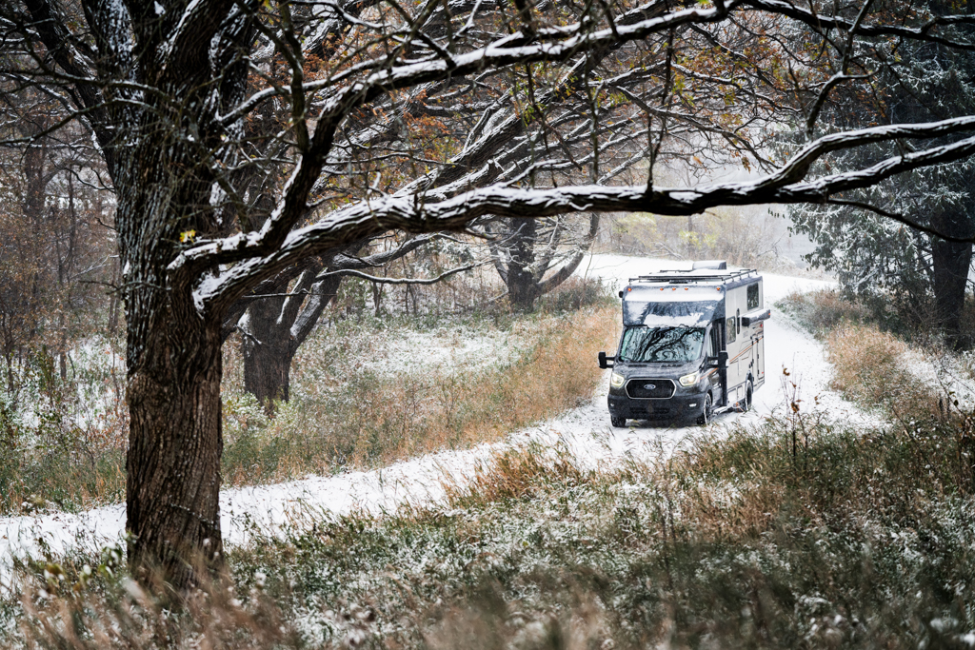
Whether you’re buttoning up your RV for the winter or heading out into the snow for a new kind of adventure, a little preparation goes a long way.
If you’re storing your rig, get that water out, do your maintenance, and keep it clean and dry. If you’re heading for the mountains, pack smart, stay warm, and enjoy the peace and quiet that only winter camping can bring.
We’ve found that winter is one of the best times to RV—fewer people, more stars visible, and a whole different kind of beauty. So don’t be afraid of the cold. With a little prep, your RV (and your sense of adventure) will handle it just fine.
Comments
Comments on this post are moderated, so they will not appear instantly. All relevant questions and helpful notes are welcome! If you have a service inquiry or question related to your RV, please reach out to the customer care team directly using the phone numbers or contact form on this page .